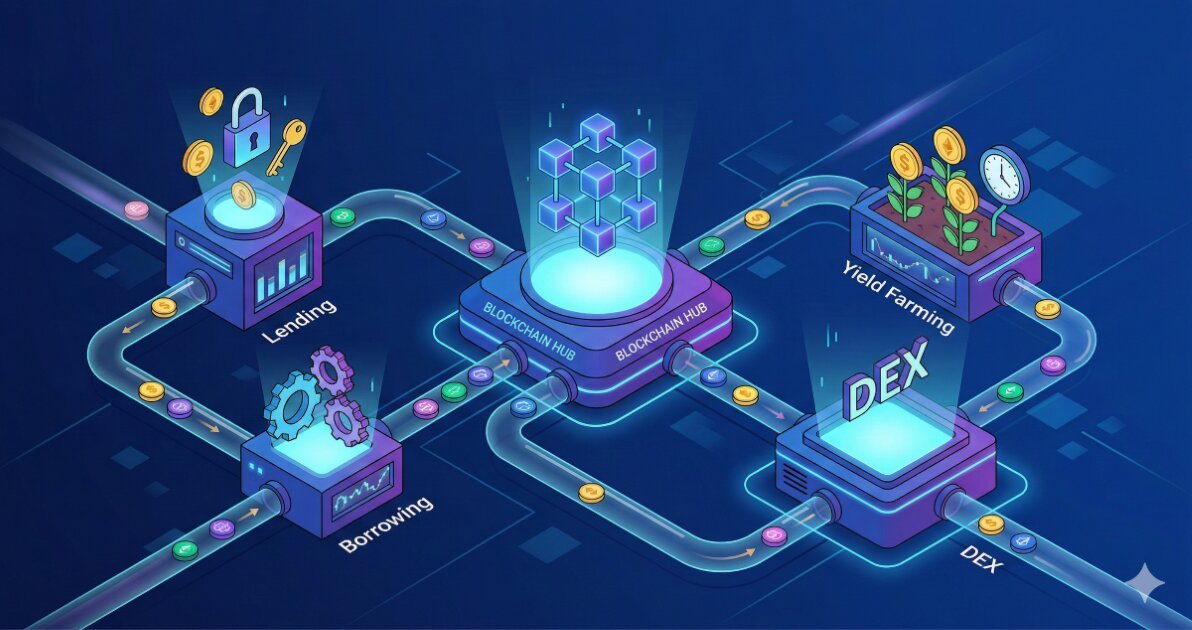
Wellington HC operates as a hybrid custody crypto exchange platform that combines aspects of traditional centralized infrastructure with onchain settlement options. The platform targets institutional participants and high net worth individuals seeking a middle ground between full custodial control and pure decentralized exchange mechanics. This article examines the technical architecture, custody flows, integration points, and operational constraints you need to understand before routing capital or building integrations against Wellington HC infrastructure.
Hybrid Custody Architecture
Wellington HC implements a dual custody model where user deposits flow into segregated omnibus wallets managed by the exchange, but with user controlled withdrawal authorization requirements for amounts exceeding platform defined thresholds. The exchange maintains hot wallets for liquidity provisioning and operational trading, warm wallets for medium term holdings requiring manual approval processes, and cold storage vaults using multisignature schemes with third party custodians holding partial key shares.
The platform enforces a tiered access model. Tier one users (verified institutions with AML/KYC clearance and established banking relationships) can withdraw up to their daily limit without additional authorization beyond standard 2FA. Tier two users face lower thresholds and require email confirmation plus time delayed execution on withdrawals exceeding specific amounts. The exact threshold values vary by asset and user classification, so confirm current limits in your account settings before assuming instant liquidity for large positions.
Settlement occurs through a hybrid process. Trades between users on the Wellington HC order book settle internally through database updates to account balances, avoiding onchain transaction costs. Users can request onchain settlement for specific trades or balances, triggering actual blockchain transfers to addresses they control. This introduces blockchain confirmation latency (10 minutes to 2 hours depending on network congestion and required confirmation depth) and associated gas costs that the user bears.
Order Matching and Execution Infrastructure
The exchange runs a continuous limit order book using a price time priority matching engine. Orders arrive via REST API, WebSocket streams, or the web interface, entering a queue processed by the matching engine at claimed latency figures you should independently benchmark. The platform does not publicly document whether the matching engine uses FPGA acceleration, colocated matching servers, or standard server infrastructure, so treat published latency claims as marketing until verified.
Market orders execute against the best available liquidity in the order book up to the specified quantity or value limit. The platform applies a configurable slippage protection threshold that cancels market orders if execution would occur at prices worse than a percentage deviation from the last trade price. This threshold defaults to values typically between 2% and 5% but check your order interface for the current setting, as executing a large market order against thin liquidity can trigger unexpected cancellations.
Stop loss and take profit orders function as conditional limit orders held in the platform’s order management system. These orders do not appear in the public order book until triggered. The trigger mechanism polls the last trade price at intervals the platform does not publicly specify. During high volatility periods or flash crashes, stop orders may trigger at prices significantly worse than the stop price due to orderbook gaps and the polling interval creating execution delay.
API Integration and Data Feeds
Wellington HC provides REST endpoints for account management, order placement, and historical data retrieval, plus WebSocket feeds for real time orderbook updates and trade execution notifications. The API implements rate limiting on a per endpoint, per API key basis. Typical limits fall in the range of 10 to 100 requests per second for market data endpoints and 1 to 10 requests per second for trading operations, but these vary by account tier.
Authentication uses HMAC SHA256 signed requests with API keys generated through the web interface. The platform requires timestamp validation within a rolling window (commonly 30 to 60 seconds) to prevent replay attacks. Your system clock must synchronize within this window or all authenticated requests will fail with timestamp errors. Use NTP synchronization and monitor clock drift if running automated trading systems.
The WebSocket feed delivers orderbook snapshots followed by incremental updates. Your client must handle sequence number gaps, which indicate missed messages requiring a fresh snapshot request. The platform may disconnect idle WebSocket connections after timeout periods ranging from 1 to 10 minutes, so implement heartbeat messages or periodic subscription renewal to maintain persistent connections.
Worked Example: Institutional Withdrawal Flow
An institution holds 50 BTC in their Wellington HC account and needs to withdraw 30 BTC to a cold storage address for month end treasury reporting.
The institution submits a withdrawal request through the web interface or API, specifying the destination address and amount. Wellington HC checks the institution’s tier classification and confirms the 30 BTC request falls within their tier one daily limit of 100 BTC. The platform queues the withdrawal for hot wallet processing.
The hot wallet system validates the destination address format and checks against the platform’s internal blocklist of known malicious addresses. It constructs a Bitcoin transaction with inputs from the hot wallet UTXO pool, creates outputs for the 30 BTC destination and change return to the hot wallet, calculates an appropriate fee based on current mempool conditions, and broadcasts the transaction.
The institution receives a transaction ID and can monitor confirmation status through blockchain explorers. Wellington HC credits the withdrawal as complete in their interface after 1 confirmation but notes that deep chain reorganizations could theoretically reverse this. The institution’s cold storage system waits for 6 confirmations before considering the deposit final for accounting purposes.
If the request had exceeded the daily limit (say, 120 BTC), the platform would split it into multiple withdrawals across consecutive days or escalate to manual approval requiring operations team review and additional authorization from the institution’s registered signatories.
Common Mistakes and Misconfigurations
Assuming instant withdrawal availability. Tier limits, warm wallet approval delays, and onchain confirmation times can combine to create multi hour or multi day delays for large withdrawals. Factor this into liquidity planning.
Ignoring fee structures on internal versus onchain settlement. Trading fees differ from withdrawal fees, and requesting onchain settlement adds blockchain transaction costs that can exceed 0.5% for smaller amounts during network congestion.
Failing to implement WebSocket reconnection logic. Clients that don’t handle disconnections and sequence gaps will miss critical orderbook or execution updates, leading to stale trading decisions.
Using market orders in thin orderbooks. Slippage protection may cancel your order, or worse, allow execution at unfavorable prices if the protection threshold is set too wide for current market conditions.
Not monitoring API rate limits per endpoint. Aggregate request counts across all endpoints can trigger rate limiting even if individual endpoints stay within bounds. Track usage per endpoint class separately.
Trusting platform balance displays for reconciliation. Internal database balances may not reflect pending withdrawals, deposits in confirmation, or trades in settlement. Export transaction histories and reconcile against your own accounting records.
What to Verify Before Relying on Wellington HC
- Current tier limits and withdrawal thresholds for your account classification and each asset you trade
- Fee schedules including trading fees, withdrawal fees, and whether onchain settlement incurs additional charges
- API rate limits per endpoint for your account tier, documented separately from marketing materials
- Custodian identity and insurance coverage terms for cold storage holdings
- Jurisdictional licensing status in regions where you or your users operate
- Support response SLAs and escalation procedures for withdrawal delays or technical issues
- Whether the platform supports specific blockchain features you require (SegWit addresses, batched transactions, custom fee selection)
- Orderbook depth and typical spread for assets you plan to trade in meaningful size
- Historical uptime metrics and scheduled maintenance windows that could affect trading operations
- Onchain reserve addresses and whether the platform provides cryptographic proof of reserves
Next Steps
Run a small capital test cycle. Deposit a minimal amount, execute test trades, and withdraw to verify the complete flow including timing, fees, and interface behavior before committing operational capital.
Implement robust API error handling. Build retry logic with exponential backoff, rate limit detection, and graceful degradation when the platform is unresponsive or returning errors.
Establish independent monitoring. Track your onchain deposits and withdrawals through your own blockchain node or trusted explorer API, not just platform confirmations, to detect discrepancies early.
Category: Crypto Exchanges