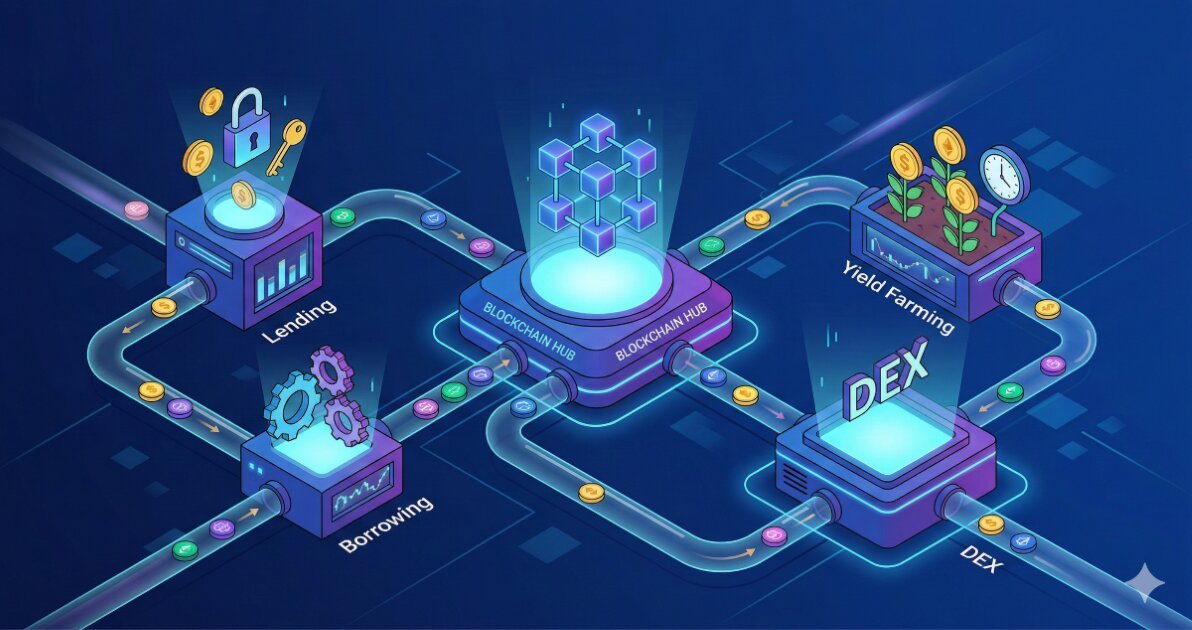
A white label crypto exchange platform is a turnkey exchange infrastructure built by a technology provider that lets a buyer rebrand and deploy it as their own trading service. The buyer gains a functioning order book, custody layer, trading engine, and user interface without building core matching and settlement logic from scratch. This article examines the technical stack, integration points, hosting models, and operational trade-offs that distinguish white label deployments from ground-up builds or third party integrations.
Core Components and Vendor Boundaries
A typical white label package includes a matching engine, wallet infrastructure, KYC/AML workflow hooks, an admin panel, and client facing web and mobile applications. The matching engine handles order placement, cancellation, and execution. The wallet module manages hot wallet liquidity, cold storage sweeps, and deposit/withdrawal processing. KYC/AML workflows are often integration points rather than built-in solutions; the platform exposes API hooks to third party identity verification services.
The vendor supplies the compiled or containerized application stack. You control branding assets, domain configuration, fee schedules, and often the choice of blockchain nodes and liquidity sources. The boundary between vendor code and your customization varies. Some platforms deliver source code and let you modify matching logic or add trading pairs. Others provide only Docker images and configuration files, locking you into their release cycle for bug fixes and feature updates.
Hosting and Custody Models
White label platforms support three main hosting configurations: vendor hosted, self hosted on your infrastructure, and hybrid. Vendor hosted deployments run on the provider’s cloud environment. You access an admin dashboard and API but do not manage server provisioning or database backups. Self hosted deployments give you full control over compute, storage, and network topology, but require DevOps resources to handle scaling, patching, and disaster recovery.
Hybrid models split components. A common pattern places the matching engine and databases on your infrastructure for data sovereignty, while the vendor hosts the KYC integration layer and periodic security updates. This reduces your operational overhead but introduces latency between components if network paths cross availability zones or regions.
Custody architecture determines who holds private keys. Vendor hosted platforms often use a multi signature wallet scheme where the vendor holds one key, you hold another, and a third party escrow service holds a tie-breaker. Self hosted setups let you control all keys, but you must implement your own hot/cold segregation policy and signing workflows. Confirm whether the platform uses hardware security modules for key storage and whether the HSM integration is included or requires separate licensing.
Liquidity and Order Routing
Internal liquidity depends on your user base. New exchanges often start with thin order books and wide spreads. White label platforms address this through external liquidity integrations: API connections to other exchanges, market maker partnerships, or aggregated liquidity pools. Some vendors bundle liquidity as a service, routing your orders to a network of market makers who commit to quote spreads within defined tolerances.
Order routing logic matters. If the platform supports external liquidity, verify whether it performs best execution analysis or simply routes to a preconfigured endpoint. Best execution engines compare available quotes, account for taker fees at each venue, and route to the option with the lowest total cost. Preconfigured routing may send orders to a single partner regardless of price, which can disadvantage your users compared to direct market access.
Check whether liquidity agreements impose minimum volume thresholds, lock-in periods, or revenue sharing terms. Some market makers require you to route a percentage of order flow exclusively to them or charge a monthly retainer in addition to spreads.
Customization Depth and Technical Lock-In
White label platforms vary in how much you can alter their behavior. Configuration based customization lets you toggle features, set fee tiers, enable or disable trading pairs, and adjust withdrawal limits via admin panels or JSON config files. This approach minimizes engineering effort but restricts you to the vendor’s supported feature set.
Code level customization requires access to source repositories. Platforms that provide React or Vue.js frontends as editable projects let you redesign the UI and add analytics widgets. Backend access lets you modify matching rules, implement custom order types, or integrate proprietary risk controls. The trade-off is merge complexity. When the vendor releases security patches or protocol upgrades, you must reconcile their changes with your modifications. Establish a branching strategy and automated test coverage before diverging from the vendor baseline.
Proprietary licensing models sometimes prohibit redistribution or impose per-instance fees if you scale horizontally. Read the license agreement to understand whether spinning up additional matching engine replicas for geographic distribution or failover incurs incremental charges.
Regulatory Adaptation and Compliance Hooks
Exchange operators face jurisdiction specific registration, reporting, and transaction surveillance requirements. White label platforms provide compliance primitives: user tier systems that map to KYC levels, transaction export APIs for regulatory reporting, and configurable trading limits based on user verification status.
Verify whether the platform supports real time transaction monitoring integration. Regulators in several jurisdictions require exchanges to flag suspicious patterns such as wash trading, layering, or coordinated pump activity. Some white label solutions include rules engines that score trades against configurable heuristics. Others expose raw trade streams via webhooks, expecting you to integrate a third party surveillance tool.
Geographic restrictions are typically managed through IP geofencing and document verification checks. The platform should let you blocklist countries, require specific document types per jurisdiction, and enforce trading restrictions on users who do not meet local licensing thresholds. Confirm how frequently the geofencing database updates and whether the vendor provides ongoing regulatory guidance as part of support agreements.
Worked Example: Processing a Fiat Deposit and First Trade
A user in the European Union completes KYC tier two verification, submits a 5,000 EUR bank transfer, and places a market buy order for Bitcoin. The platform receives a webhook from the payment processor confirming the wire. The deposit module credits 5,000 EUR to the user’s internal fiat balance and logs the transaction with timestamp, bank reference, and compliance flags.
The user initiates a market buy order. The matching engine queries the internal order book. If internal liquidity is insufficient, the engine routes the order to an external liquidity provider via API. The provider returns an executable quote of 0.12 BTC at 41,666 EUR per BTC. The engine debits 5,000 EUR from the user’s balance, executes the fill, and credits 0.12 BTC to the user’s spot wallet.
The wallet module registers the BTC balance update and increments the hot wallet reserve by 0.12 BTC. A scheduled job runs every hour to sweep excess hot wallet balances above a threshold (for example, 5 BTC) to cold storage. The admin dashboard records the trade in the transaction ledger, flags the user for AML velocity checks if deposit and withdrawal volumes exceed defined limits, and updates fee accruals for month-end settlement.
Common Mistakes and Misconfigurations
- Underestimating hot wallet reserve requirements. Setting the threshold too low triggers frequent cold storage sweeps, delaying user withdrawals. Setting it too high increases exposure to hot wallet compromise.
- Deploying without rate limiting on withdrawal endpoints. Automated attacks can drain liquidity faster than manual intervention can halt them. Configure per-user and per-IP withdrawal caps separate from KYC tier limits.
- Failing to test failover between matching engine replicas. Active/passive setups require health checks and automatic DNS or load balancer cutover. A manual failover process adds minutes of downtime during market volatility.
- Ignoring database query performance under load. Order book reconstruction, user balance queries, and trade history endpoints can bottleneck at scale. Index foreign keys, partition historical trade tables, and cache frequently accessed user balances.
- Assuming the vendor handles all security patching. Confirm SLA response times for critical vulnerabilities. If you self host, subscribe to the vendor’s security mailing list and maintain a staging environment to test patches before production deployment.
- Not reviewing liquidity provider counterparty risk. External liquidity partners can halt quoting during volatility, leaving your order book one-sided. Negotiate uptime guarantees and maintain fallback providers.
What to Verify Before You Rely on This
- Current licensing terms for source code access, modification rights, and horizontal scaling.
- Whether the platform’s blockchain node infrastructure is included or requires separate provisioning and syncing.
- Maximum throughput specifications for the matching engine under realistic order arrival rates (orders per second, latency percentiles).
- Support SLA response times for critical bugs, security incidents, and infrastructure outages.
- Upgrade cadence and whether updates require downtime or support rolling deployments.
- Database engine requirements (PostgreSQL version, replication topology, backup frequency).
- Third party API dependencies (KYC providers, liquidity partners, payment processors) and fallback behavior if they become unavailable.
- Fee structures for ongoing support, maintenance, and feature development beyond the initial license.
- Regulatory compliance coverage in your target jurisdictions and whether the vendor provides legal guidance or only technical primitives.
- Disaster recovery runbooks and whether the vendor provides incident response assistance.
Next Steps
- Request a technical deep dive session with the vendor’s engineering team to review architecture diagrams, API contracts, and database schemas.
- Deploy a sandbox instance on your infrastructure to benchmark matching engine latency, wallet processing throughput, and failover behavior under simulated load.
- Consult with legal and compliance teams to map the platform’s KYC, AML, and reporting hooks to your jurisdiction’s specific requirements before committing to a license agreement.
Category: Crypto Exchanges