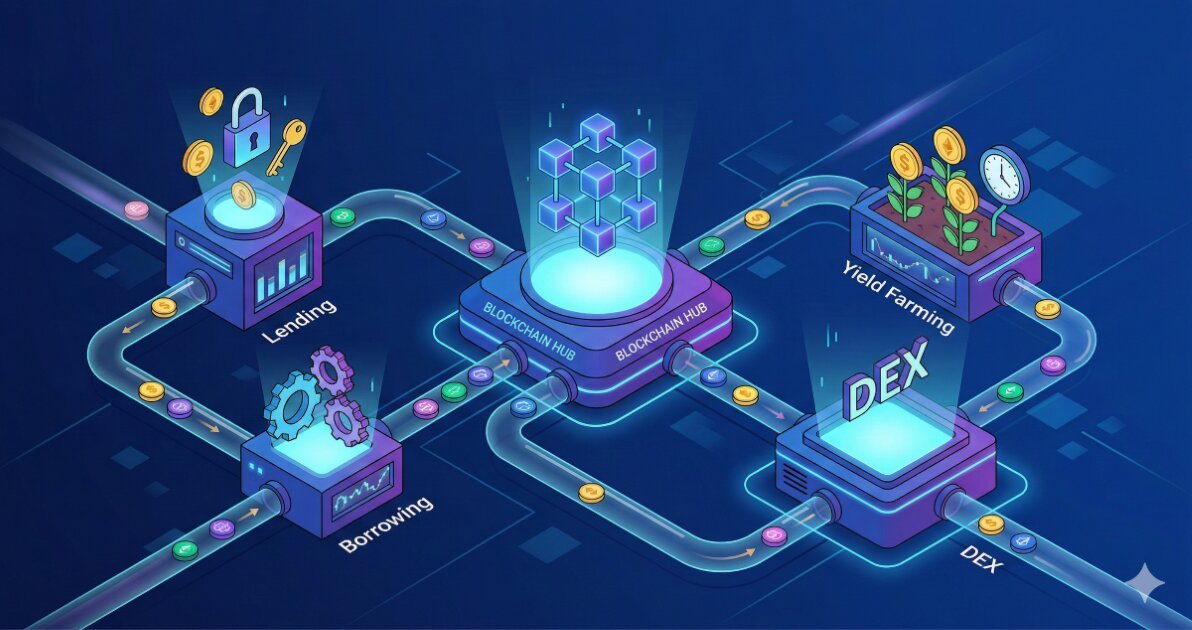
A crypto exchange solution is the software infrastructure that enables spot and derivative trading of digital assets. For teams building or integrating one, the choice hinges on order matching performance, custody model, liquidity routing, regulatory hooks, and deployment topology. This article dissects the technical decision points operators face when selecting between white label platforms, modular components, and ground-up builds.
Core Architecture Models
Exchange solutions typically fall into three patterns.
Turnkey white label platforms bundle matching engine, wallet infrastructure, KYC integrations, and admin panels. Vendors deliver a hosted or on-premises instance that you rebrand. You control fee schedules and supported pairs but inherit the vendor’s custody model and upgrade cadence. Liquidity depth depends on whether the platform aggregates order flow across clients or isolates each deployment.
Modular component stacks let you compose a matching engine from one vendor, wallet custody from another, and liquidity bridges from a third. This approach demands integration work but isolates risk. If your matching engine vendor deprecates a feature, you swap the module without migrating user balances. The trade off is operational complexity: monitoring spans multiple SLAs and debugging crosses vendor boundaries.
Custom builds suit teams with specific latency requirements or regulatory constraints that no vendor satisfies. You own the entire stack, from the order book data structure to the settlement finality logic. Development timelines stretch to quarters or years, but you retain the ability to optimize for niche use cases like privacy preserving order matching or zero knowledge proof of reserves.
Order Matching and Execution Topology
Matching engine performance dictates maximum throughput and worst case latency. Most solutions use a central limit order book (CLOB) with price-time priority. The engine maintains bid and ask queues in memory, matches incoming orders, and writes fills to a durable log before acknowledging the client.
Latency sensitive deployments colocate the matching engine with market maker API endpoints to minimize round trip time. Some platforms shard the order book by trading pair to parallelize matching, though this prevents crossmarket atomic trades. Verify whether the solution supports post-only orders, iceberg orders, and stop triggers natively or requires client-side polling.
Settlement happens either synchronously (the user’s balance updates before the API returns) or asynchronously (the fill event queues for a separate settlement worker). Asynchronous models achieve higher throughput but complicate wallet balance consistency. If a user cancels a withdrawal while a sell order settles, the balance reconciliation logic must serialize these events or risk double spending.
Custody Integration Paths
Exchange solutions manage private keys through hot wallets, cold storage, or hybrid schemes.
Hot wallets keep keys in memory or hardware security modules (HSMs) accessible to the withdrawal service. Deposits credit instantly, and withdrawals execute within seconds. The risk surface includes server compromise, insider access, and HSM firmware vulnerabilities. Operators mitigate this by capping hot wallet balances and sweeping surplus funds to cold storage on a fixed schedule.
Cold storage isolates keys in offline environments. Withdrawals require manual signing ceremonies or airgapped devices. This reduces instant liquidity but protects the majority of user funds. The solution must coordinate pending withdrawal queues, threshold signature schemes if using multisig, and fallback procedures when signers are unavailable.
Hybrid topologies allocate a percentage of total value to hot wallets based on historical withdrawal velocity. If daily outflows average 5% of assets under management, the hot wallet might hold 10% to buffer variance. The solution should expose metrics on hot/cold ratios and automate rebalancing transfers when thresholds breach.
Some platforms integrate with third party custodians that provide insurance and regulatory compliance. The trade off is latency: each withdrawal request traverses an API call to the custodian, approval workflows, and blockchain confirmation delays.
Liquidity and Market Depth Strategies
A new exchange lacks organic order flow, so solutions typically offer liquidity bootstrapping mechanisms.
Internal market making bots place synthetic orders to narrow spreads. The exchange operator funds these bots and absorbs inventory risk. This approach gives full control over spread and depth but requires capital and exposes the operator to adverse selection if external traders detect the bot’s patterns.
Liquidity aggregation APIs connect to other exchanges and mirror their order books locally. When a user fills an aggregated order, the solution simultaneously executes on the source exchange and settles the trade internally. Latency spikes or source exchange downtime cause failed fills. Verify how the solution handles partial fills and whether it supports smart order routing across multiple sources.
Incentivized market maker programs grant fee rebates or API advantages to external firms that maintain quoted spreads. The solution must track uptime, spread consistency, and quote depth to enforce program terms.
Worked Example: Spot Order Execution Flow
A user submits a limit buy for 2 BTC at 40,000 USDT per coin. The solution performs these steps:
- The API gateway authenticates the WebSocket connection, checks the user’s USDT balance (80,000 available), and validates order parameters.
- The matching engine receives the order, locks 80,000 USDT in the user’s account, and scans the sell side of the BTC/USDT book.
- The best ask is 1.5 BTC at 39,950 USDT. The engine matches this, creating a fill for 1.5 BTC at 39,950 (59,925 USDT total).
- The remaining 0.5 BTC at 40,000 USDT enters the bid queue.
- The settlement worker debits 59,925 USDT, credits 1.5 BTC, and publishes the fill event to the user’s WebSocket.
- The unmatched portion remains open until another sell order crosses 40,000 or the user cancels.
If the solution uses maker/taker fee tiers, the settlement worker also calculates fees. A 0.1% taker fee on 59,925 USDT adds 59.925 USDT, deducted from the credited BTC or the locked USDT depending on fee model.
Common Mistakes and Misconfigurations
- Skipping replay log durability tests. If the matching engine crashes mid-fill, the solution must reconstruct state from a write ahead log. Test that the log survives disk corruption and that replay matches pre-crash balances.
- Underestimating blockchain confirmation depth requirements. Crediting deposits after a single confirmation exposes the exchange to chain reorganizations. Verify the solution’s default depth per chain and whether it adjusts during high volatility.
- Ignoring withdrawal queue serialization. Concurrent withdrawal requests for the same user can race if the hot wallet service doesn’t lock the account during signing. This causes overdrafts or stuck transactions.
- Hardcoding liquidity provider credentials in config files. If an aggregation API key leaks, an attacker can drain the exchange’s balance on the external platform. Use secrets management with rotation policies.
- Neglecting order book snapshot consistency. If the WebSocket stream and REST snapshot API query different replicas with replication lag, clients see phantom orders or missed fills.
- Assuming instant settlement for all assets. Some chains have variable block times or require finality gadgets. The solution must handle per-asset settlement delays without locking unrelated pairs.
What to Verify Before You Rely on This
- Current insurance coverage terms if using a third party custodian, including per-event caps and exclusions for insider fraud.
- Maximum order book depth the matching engine supports before degrading latency or rejecting new orders.
- Whether the solution’s blockchain nodes run in pruned mode, which prevents historical transaction lookups for audits.
- Supported signature schemes for multisig withdrawals and compatibility with your preferred hardware wallets.
- Rate limits on deposit and withdrawal endpoints, and whether they apply per user, per IP, or per API key.
- Compliance module capabilities: does it log trades in a format compatible with your jurisdiction’s reporting requirements, or do you need to build export scripts.
- Upgrade process and expected downtime for version migrations, especially if you run on-premises.
- WebSocket reconnection behavior and whether the solution replays missed events or requires a full order book resync.
- Default database replication topology and whether read replicas introduce inconsistencies for balance queries.
- Licensing restrictions on API request volume or monthly trade volume, and overage pricing.
Next Steps
- Deploy a test instance with simulated order flow to measure latency percentiles under load and identify bottlenecks before committing capital.
- Audit the solution’s withdrawal approval logic end to end, including edge cases like concurrent requests, failed blockchain broadcasts, and custodian API timeouts.
- Map your regulatory obligations to the solution’s compliance hooks and identify gaps that require custom middleware or manual processes.
Category: Crypto Exchanges