Selecting an exchange isn’t about finding a single “best” platform. It’s about matching operational requirements to platform capabilities across liquidity depth, custody model, fee structure, settlement latency, and regulatory exposure. This article breaks down the technical and operational criteria that matter when you’re routing meaningful capital or building trading infrastructure.
Custody Model and Counterparty Risk
Centralized exchanges hold your private keys. You deposit assets into addresses they control, trade against their internal ledger, and request withdrawals that they batch and process. This introduces counterparty risk: the exchange can freeze accounts, suffer operational failure, or experience insolvency. The FTX collapse in November 2022 demonstrated that large user bases and venture backing do not eliminate this risk.
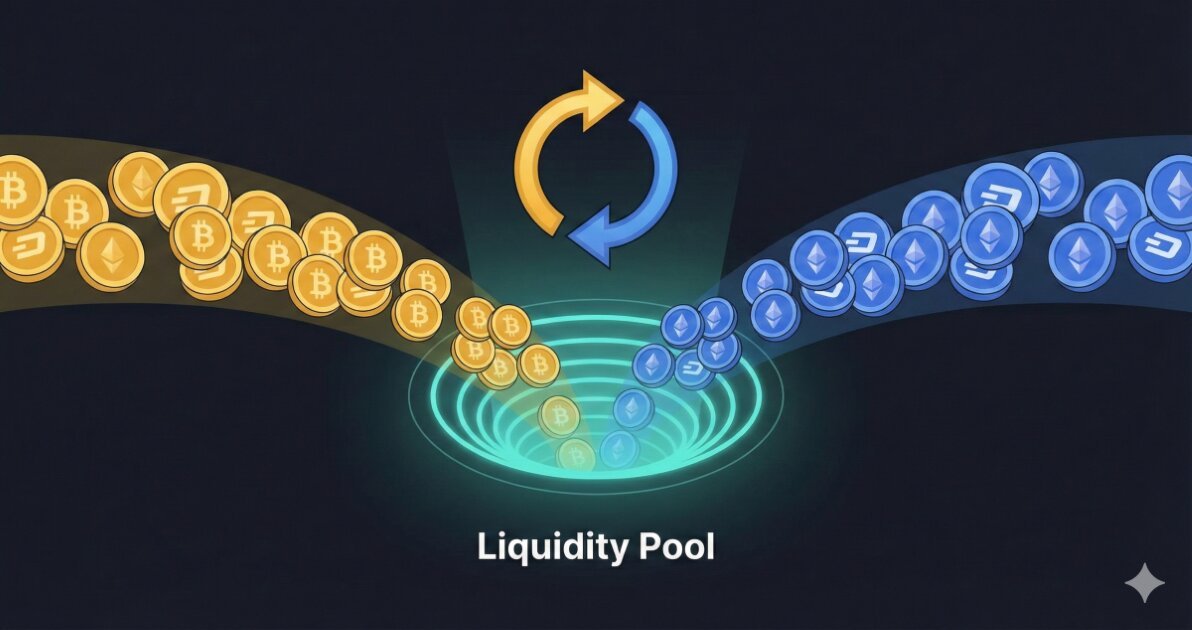
Decentralized exchanges eliminate custody risk by executing swaps directly from your wallet via smart contracts. You retain key control throughout. The tradeoff is execution cost (gas fees on Ethereum L1 can exceed trade value for small positions) and liquidity fragmentation across multiple automated market maker pools.
Hybrid models exist. Some centralized platforms offer proof of reserves attestations, though these snapshots don’t prove solvency or prevent fractional reserve practices between audits. A few provide noncustodial trading where settlement occurs onchain after order matching happens offchain, combining speed with reduced custody exposure.
Liquidity Depth and Slippage Behavior
Order book depth determines slippage on larger trades. An exchange showing tight spreads at the top of book may have thin liquidity 50 basis points away, causing material slippage on institutional size orders.
Check aggregated liquidity across multiple price levels. For a BTC/USDT pair, compare the volume available within 10, 25, and 50 basis points of mid price. Exchanges serving retail often show good depth in the top 5 levels but fall off quickly. Platforms catering to institutional flow maintain deeper books but may require higher minimum balances or verification tiers to access full liquidity.
Maker-taker fee structures influence displayed liquidity. Negative maker fees (rebates for providing liquidity) attract market makers who post resting limit orders, improving book depth. If you primarily execute market orders, you pay taker fees that can range from 0.01% to 0.10% depending on volume tier and asset pair.
Fee Structure and Volume Tiers
Fee schedules vary across base rate, volume tiers, payment token discounts, and maker versus taker classification. A typical tier structure might charge 0.10% taker and 0.08% maker at zero volume, dropping to 0.04% taker and 0.02% maker (or negative) above $50 million in 30 day volume.
Some exchanges offer fee discounts when paying in their native platform token. This introduces price risk on the token itself. Calculate whether the discount percentage exceeds the expected volatility and liquidity cost of holding that token. For large volume traders, negotiate custom fee schedules directly rather than relying on published tiers.
Withdrawal fees matter for strategies requiring frequent settlement. Fixed fee structures (e.g., 0.0005 BTC per withdrawal) disproportionately affect smaller positions. Dynamic fees that adjust to network congestion are more efficient but less predictable for cost modeling.
Settlement Speed and Withdrawal Processing
Centralized exchanges batch withdrawals to manage hot wallet exposure and operational cost. Typical processing ranges from minutes to several hours, with larger amounts often triggering manual review. Some platforms impose 24 to 72 hour holds on first withdrawals from new addresses.
For trading strategies requiring rapid rebalancing across venues or moving collateral to derivatives platforms, settlement latency creates opportunity cost and timing risk. Check actual withdrawal completion times during both normal and high volatility periods. Published SLAs often reflect optimal conditions, not 95th percentile latency.
Fiat on and off ramps introduce additional delay. ACH transfers may clear in 3 to 5 business days, wire transfers in 1 to 2 days. Some jurisdictions require additional AML review periods. Stablecoin deposits and withdrawals typically settle faster than traditional banking rails.
Regulatory Jurisdiction and Access Restrictions
Exchange regulatory status affects available products, insurance coverage, and legal recourse. Platforms licensed in jurisdictions with strict capital requirements and segregated customer fund rules provide different risk profiles than offshore entities.
Geographic restrictions change. An exchange accessible from your location today may implement IP blocks or require additional verification tomorrow based on evolving regulatory guidance. Platforms serving US users typically restrict certain tokens classified as securities and may not offer perpetual futures or high leverage products.
Tax reporting obligations vary. Exchanges operating under certain jurisdictions automatically report transaction data to tax authorities. Others provide CSV exports but don’t file directly. If you operate across multiple platforms, consolidate transaction data early rather than reconstructing trade history during tax season.
Worked Example: Routing a $500K BTC Purchase
You need to convert $500K USDT to BTC with minimal slippage and acceptable custody exposure.
Exchange A shows 0.08% taker fee and 15 BTC available within 20 basis points of mid on their BTC/USDT book. Current mid is 42,000 USDT. Your order size is approximately 11.9 BTC. Expected slippage is 8 to 12 basis points based on book depth, plus 80 basis points in fees. Total cost roughly 90 basis points.
Exchange B offers 0.05% taker fee but only 8 BTC within 20 basis points. You’d need to execute at higher levels or split the order, likely experiencing 15 to 20 basis points slippage. Total cost approaches 70 basis points on filled portion but execution uncertainty increases.
Exchange C is a decentralized platform. Gas costs for the swap transaction currently run $45 to $80 depending on network congestion. The largest liquidity pool for this pair has $12M TVL, suggesting slippage under 10 basis points for your size. No custody risk, but you pay gas plus approximately 0.25% to 0.30% in pool fees. Total cost around 35 basis points plus fixed gas cost.
You split the order: 60% on Exchange A for guaranteed depth and speed, 40% on Exchange C to reduce custody exposure and capture better fee rate. You withdraw from Exchange A immediately after execution to cold storage, accepting the 0.0005 BTC withdrawal fee.
Common Mistakes and Misconfigurations
- Evaluating exchanges solely on advertised spreads without checking depth beyond top 3 levels. Displayed tightness doesn’t predict slippage on your actual trade size.
- Keeping material balances on exchanges offering the highest staking yields without assessing the platform’s reserve transparency or corporate structure. Yield often correlates with rehypothecation risk.
- Ignoring withdrawal processing SLAs during volatile periods. Many platforms delay or halt withdrawals when hedging their own exposure, leaving you unable to move capital when you most need mobility.
- Assuming all stablecoins have equivalent liquidity across pairs. USDT pairs often show tighter spreads than USDC or DAI on the same exchange, affecting effective execution cost.
- Using market orders during low liquidity windows (weekends, holidays, Asian session lulls for Western exchanges). Time-weighted average price execution or limit orders reduce information leakage and slippage.
- Overlooking platform-specific trading rules like minimum order sizes, tick size increments, or self-trade prevention logic that can cause unexpected rejections during algo execution.
What to Verify Before You Commit Capital
- Current proof of reserves attestation date and auditor. Monthly attestations are standard; quarterly suggests lower transparency priority.
- Withdrawal processing time percentiles during the past 90 days, particularly during high volatility events. Request this data from support if not publicly available.
- Geographic restrictions and whether the platform has announced upcoming access changes in your jurisdiction.
- Insurance coverage specifics: amount, what scenarios it covers (hot wallet breach versus insolvency), and the underwriter.
- Fee schedule effective date and whether volume tiers apply across all pairs or only specific markets.
- API rate limits, order placement latency, and whether market data feeds include full book depth or only top levels.
- Margin and liquidation engine behavior if you plan to use leverage. Check actual liquidation prices during past drawdowns versus theoretical calculations.
- Token listing process and delisting criteria. Exchanges with loose listing standards increase exposure to low liquidity or compromised assets.
- Corporate structure, parent entity jurisdiction, and whether customer assets are legally segregated from company operating funds.
- Historical uptime during network congestion or rapid market moves. Platform stability matters most when you need it.
Next Steps
- Benchmark effective execution cost across three candidate exchanges using identical order sizes in your primary pairs. Include fees, expected slippage from current book depth, and withdrawal costs.
- Set up accounts on both a primary centralized exchange with strong liquidity and a decentralized alternative. Test deposit, trade, and withdrawal flows with small amounts before committing operating capital.
- Implement automated balance monitoring and establish withdrawal triggers based on concentration limits. Custody risk scales with balance size and duration; actively manage both dimensions.
Category: Crypto Exchanges